

We invite you to learn more about the LA Program!
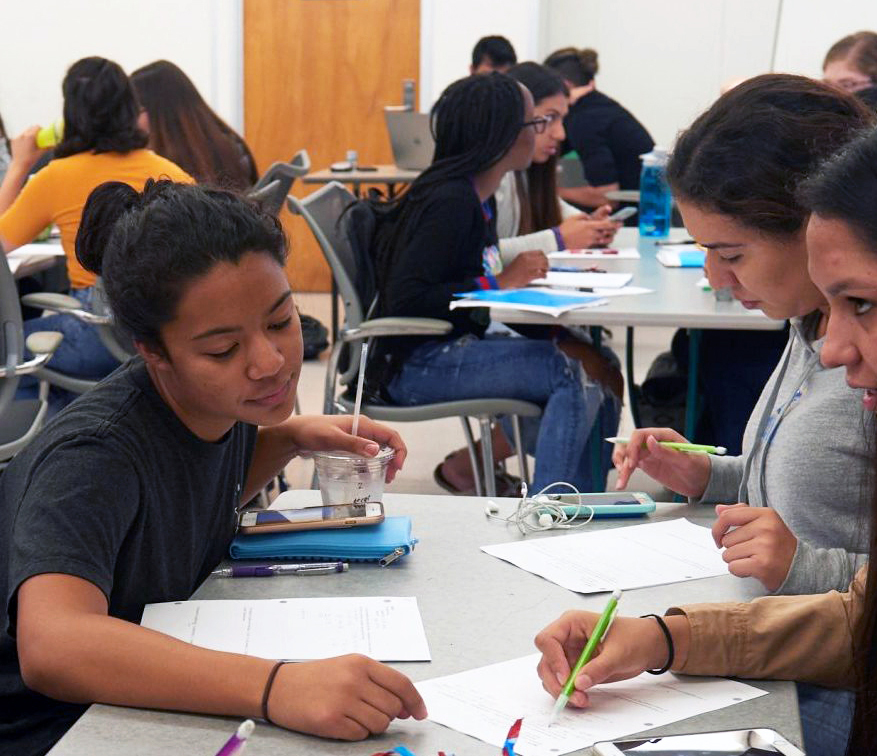
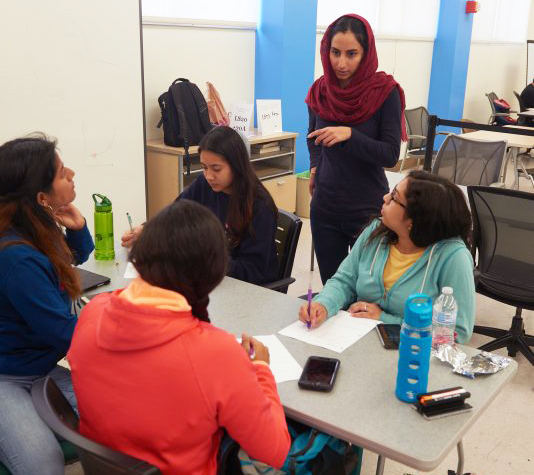
LAs are most commonly implemented in discussion or lab sections to foster collaborative learning among students working together to solve problems or do an activity.
Interested in talking to instructors who have had LAs or exploring education research on LAs?
See this list of faculty and courses that have had LAs since Fall 2020.
For a collection of more than 50 peer-reviewed publications and presentations on the impacts of Learning Assistant programs nationwide, see the Learning Assistant publications collection.
LAs Can Facilitate Active Learning
- Several studies have pointed to the value of adopting peer interaction and active learning strategies for increasing student learning and grade performance.
- Using LAs can help support the implementation of these high impact approaches.
- LA implementation in large lecture courses has helped lower the “activation energy” for active learning and contributed to its spread throughout an institution.
- When LAs are used to transform traditional lecture-dominated courses into a more interactive and inclusive format, it is generally at a ratio of about one LA for every 20-30 students.
“When I first arrived at UCLA, I was nervous to talk to a professor, let alone ask them for help, so I saw the LAs as approachable and knowledgeable figures!”
Anonymous Student / Student Response
LAs Are Associated with Factors That Increase URM Persistence and Learning
- Two of the five exemplary Physics departments highlighted by the National Research Council for retaining URM students featured an LA program.
- A very recent study covering LAs used in 67 courses at 16 different institutions found that LAs decreased and helped flip the achievement gap.
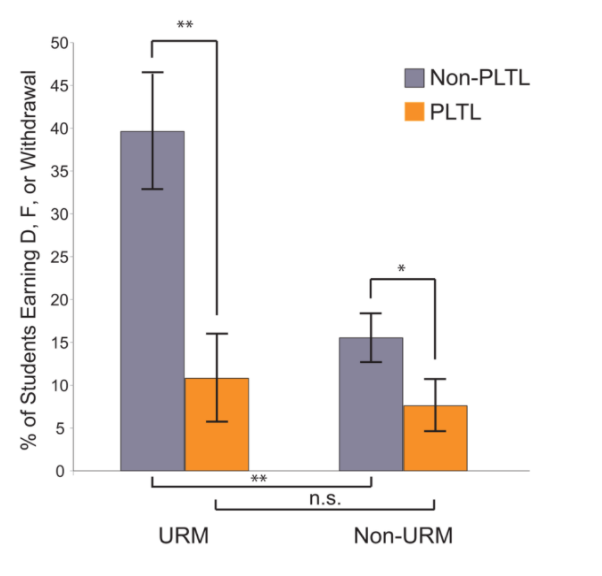
- Peer-Led Team Learning (which shares many characteristics of Learning Assistants) led to decreased DFW rates in an introductory biology class, with a disproportionately higher effect for URM students (figure at right)
LAs Can Aid Institutional Transformation of Teaching by Focusing on Discussion/Lab
- While lectures are generally less collaborative, discussion and lab sections are ideal for LA augmentation.
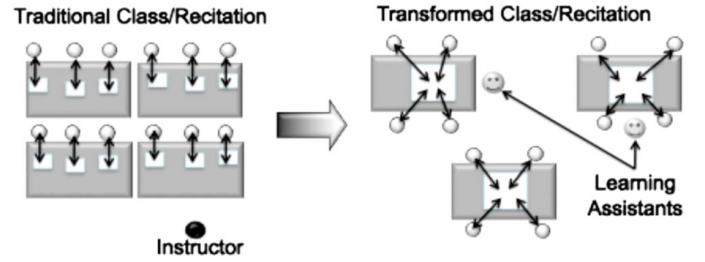
- LAs can facilitate group work and collaborative learning in a discussion section through training and by simply supplying more available instructors to circulate in the classroom.
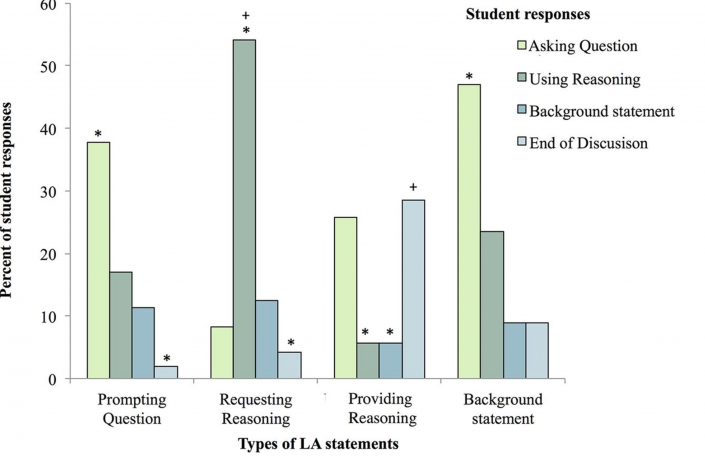
LAs in Lecture Can Increase Student Reasoning
- A study showed that in classrooms with LAs, students engaged in discussion relevant to the clicker question 93% of the time, even in sections with more than 200 students.
- Groups who regularly interacted with an LA during lecture were more likely to both request reasoning during a discussion and to spend more of discussion time on task.
LA-Transformed Physics + Biology Courses Have Higher Learning Gains
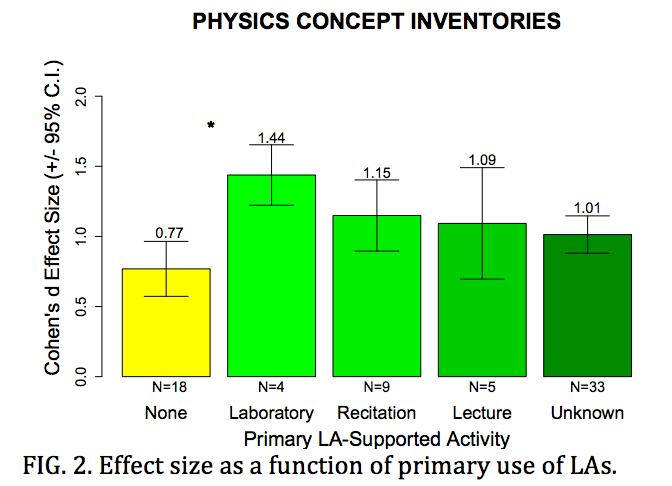
A study of LA use in 69 courses across 17 institutions found that LAs increased performance on physics concept inventories, with the largest impacts in labs, followed by discussion section, then lecture.
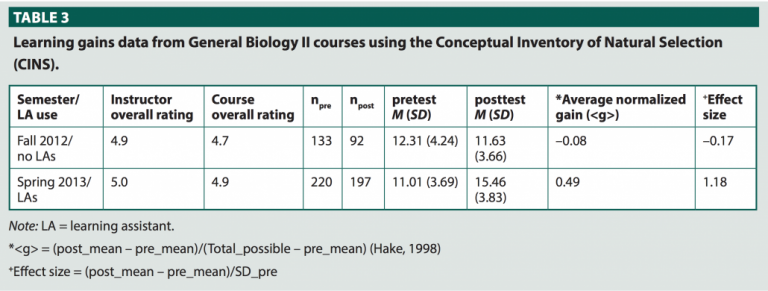
A study at University of Colorado at Denver found that even when implemented by a variety of faculty members, many of whom were not familiar with physics education research, sections taught with LA-assisted tutorials achieved higher normalized gains.
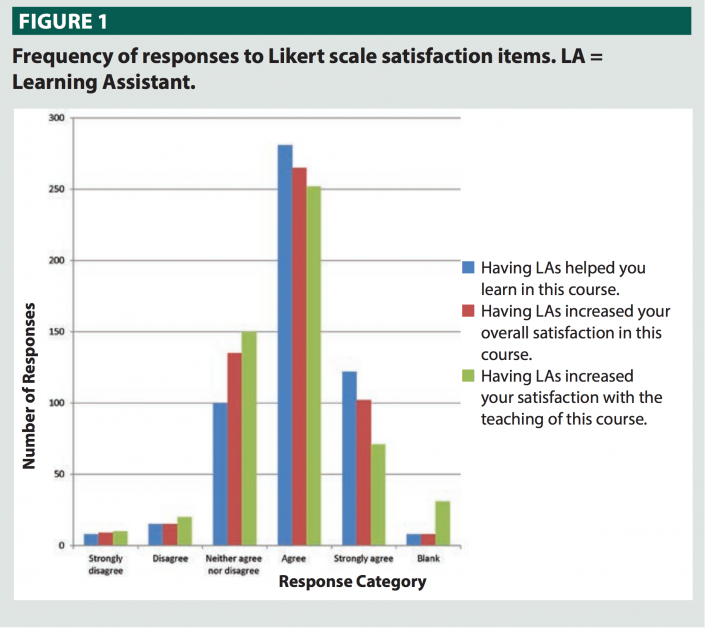
Most students surveyed about LAs agree that LAs helped them learn and feel more satisfied with the course.
We Provide
Resources that are immediately available to you if you decide to implement the Learning Assistant Program into your course.
Improves student learning & retention
Diversity-increasing aspect of your teaching
LAs with pedagogical training
Support with online forums like Piazza
Additional resources available upon request
- Additional TA training
- Worksheets to facilitate group discussion
- Additional office hours for your students
- Option to select your own LAs or have your LAs selected for you
We Ask From You
A few changes we’ll need from you to help implement the Learning Assistant Program effectively into your course.
Have Learning Assistants interact with students in discussion, lab, or lecture.
Hold weekly meetings with LAs and TAs to review discussion worksheets.
Allow us to administer online surveys to assess the effectiveness of the Learning Assistant Program.
See the 2021 literature review of studies on the impacts of Learning Assistants.